

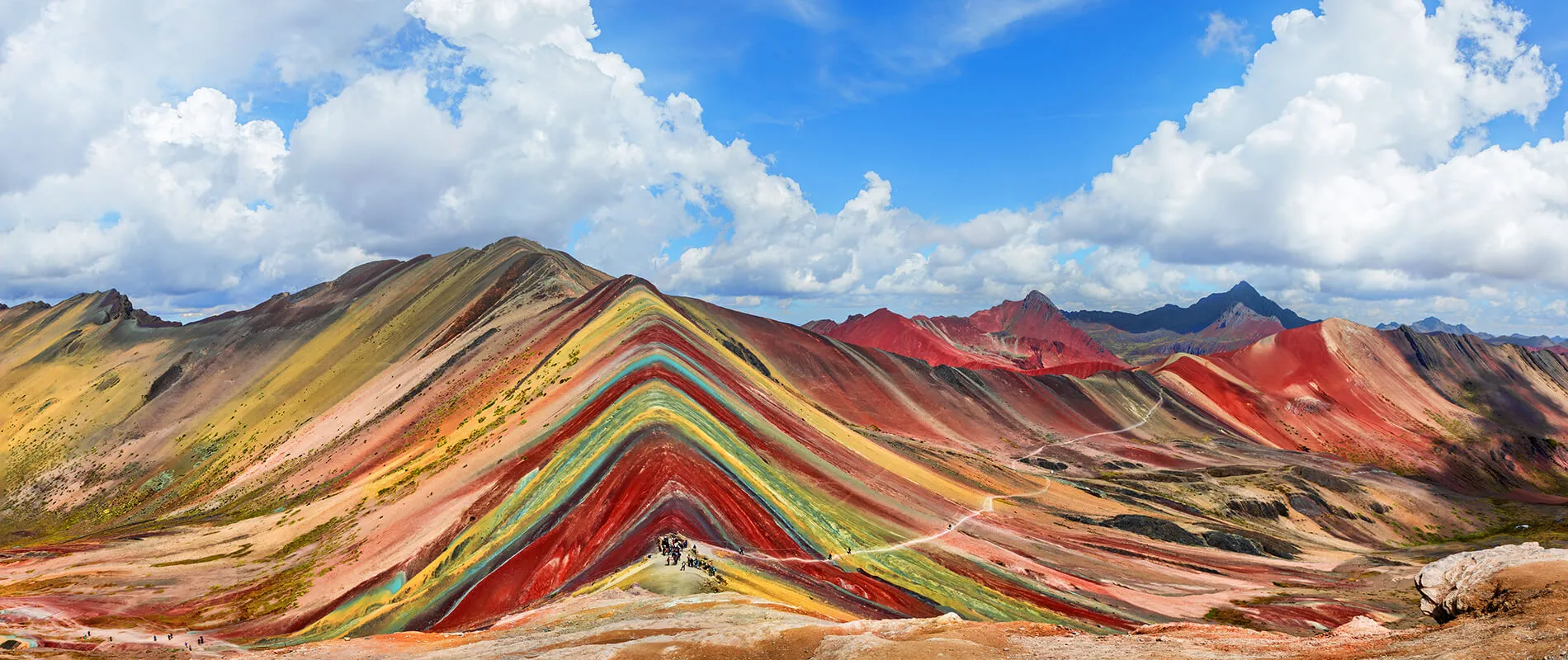
Vinicunca, internationally renowned as Rainbow Mountain or Montaña de Siete Colores (Mountain of Seven Colors), has emerged as one of Peru’s most photographed natural wonders and a must-visit destination for travelers exploring the Cusco region. This geological marvel, striped with vivid bands of red, yellow, turquoise, lavender, and gold created by mineral deposits over millions of years, sits at a staggering 5,200 meters above sea level in the Peruvian Andes. Once hidden beneath glacial ice until climate change revealed its colorful strata in recent years, Vinicunca now attracts thousands of daily visitors during peak season, creating both opportunities for authentic Andean experiences and challenges related to altitude, crowds, and sustainable tourism. Understanding what makes Vinicunca extraordinary, how to prepare for extreme altitude trekking, and when to visit transforms this bucket-list destination from a simple photo opportunity into a meaningful encounter with Peru’s geological and cultural landscapes.
The Geology Behind the Colors
Vinicunca’s spectacular coloration results from complex geological processes spanning millions of years, where different mineral compositions create the distinct colored bands that make the mountain famous. The red and pink hues derive from iron oxide oxidizing in the presence of moisture and oxygen, similar to rust formation but occurring on geological timescales. Yellow and gold layers indicate sulfur compounds, while turquoise and green bands result from copper sulfate and chlorite minerals.
These mineral-rich sedimentary layers formed during the Tertiary Period approximately 65 million years ago when the region lay beneath ancient seas. Tectonic activity associated with the Andes’ formation gradually lifted these marine sediments thousands of meters above sea level, tilting and exposing the stratified rock layers. The dramatic angle at which these layers meet the surface creates the visible striping that appears to paint the mountainside.
Until the early 21st century, permanent ice and snow covered Vinicunca year-round, concealing the colored strata. Accelerating glacial retreat attributed to climate change exposed the mineral bands, revealing this natural wonder to astonished local communities who had lived nearby for generations without knowing the spectacle hidden beneath the ice. This recent revelation explains why Vinicunca appeared in virtually no tourism literature before 2015, yet now dominates Peru travel photography.
The Trekking Experience
Route Overview
The standard Vinicunca trek begins from the village of Phulawasipata (also spelled Fullawasipata), reached via 3-4 hour drives from Cusco through increasingly remote Andean landscapes. The trail ascends approximately 600 meters over 5-7 kilometers, depending on the starting point, reaching the main viewpoint at 5,200 meters elevation.
The first section crosses relatively gentle terrain through traditional Andean communities where alpacas and llamas graze on sparse highland vegetation. As elevation increases, the landscape transitions to alpine tundra barren, rocky slopes with minimal plant life adapted to extreme altitude and temperature variations. The final approach involves steep switchbacks climbing loose scree to the viewing area where the full spectacle of Rainbow Mountain unfolds.
Most tours allocate 1.5-2.5 hours for the ascent, 30-60 minutes at the summit viewpoint, and slightly less time descending. Total trek duration spans 3-4 hours of actual hiking, though the challenging altitude means this relatively short distance feels far more demanding than sea-level equivalents.
Physical Challenges and Altitude
Vinicunca presents serious physical challenges that unprepared visitors often underestimate. The 5,200-meter summit elevation exceeds Mont Blanc (4,808m) and approaches Kilimanjaro’s Uhuru Peak (5,895m), creating oxygen levels approximately 50% of sea level. Even fit individuals accustomed to vigorous exercise at lower elevations struggle with the thin air, experiencing shortness of breath, fatigue, and sometimes more serious altitude sickness symptoms.
The altitude affects people unpredictably; physical fitness at sea level provides little protection, with some marathon runners suffering severely while sedentary individuals cope relatively well. Prior acclimatization proves the most reliable prevention strategy. Spending a minimum 2-3 days in Cusco (3,400m) before attempting Vinicunca allows critical physiological adaptations, though this still doesn’t guarantee comfortable experiences at 5,200 meters.
Warning signs requiring immediate descent include severe headaches, nausea and vomiting, extreme fatigue, confusion, or difficulty maintaining balance. Tour operators should monitor clients carefully and not pressure struggling individuals to continue, though commercial pressures sometimes compromise safety appropriately.
Alternative Access Options
For travelers unable or unwilling to trek, horseback riding provides alternative summit access. Local community members offer horses (approximately 70-100 soles) that reduce physical exertion significantly, though riders still experience altitude effects and must manage animals on steep, loose terrain. Ethical considerations around horse welfare should factor into decisions some operators maintain animals in poor condition or overwork them serving tourism demand.
A newer alternative route via Palccoyo offers lower altitude Rainbow Mountain experiences (4,900m summit) with gentler terrain requiring only 30-45 minutes hiking. Palccoyo features less dramatic coloring than Vinicunca and smaller scale, but provides more accessible options for families, elderly travelers, or those with altitude concerns. The trade-off involves reduced spectacle for increased accessibility.
Tour Logistics and Options
Standard Day Tours
Most visitors experience Vinicunca through organized day tours departing Cusco between 3:00-4:00 AM, returning around 5:00-6:00 PM after approximately 14-hour commitments. The extremely early departure allows arrival at trailheads before crowds peak and ensures adequate time for the long drive, trek, and return journey.
Tours typically cost 80-150 soles ($22-40) for basic options or 150-250 soles ($40-65) for higher-quality services. Price differences reflect group sizes (large groups of 20+ versus small groups of 8-12), meal quality (packed box lunches versus buffet breakfast and lunch), vehicle comfort (cramped minivans versus more spacious transport), guide expertise, and whether oxygen tanks are provided for emergencies.
What’s Included
Standard tour packages include round-trip transportation from Cusco, breakfast (usually basic), entrance fees to the mountain (30 soles for foreigners), and guide services. Many tours also provide walking sticks, though quality varies. Premium tours add better meals, smaller groups, bilingual guides with greater knowledge, and emergency oxygen supplies.
What’s typically NOT included: additional meals beyond basic breakfast, drinks, tips for guides and drivers, optional horse rentals, and any personal gear or medication. Budget accordingly beyond base tour costs.
Independent Trekking Considerations
Independent travel to Vinicunca is possible but complicated. Public transportation to trailhead villages runs infrequently, requiring multiple connections and potentially overnight stays in very basic communities lacking tourist infrastructure. The time and logistical complexity involved means organized tours deliver better value for most travelers despite higher costs.
However, independent hiking (after reaching trailheads) offers advantages including starting early to avoid crowds, setting personal pace without group pressure, and potentially accessing less-visited viewpoints that large tour groups bypass.
Best Time to Visit Vinicunca
Seasonal Considerations
Peru’s dry season (May-September) provides optimal Vinicunca conditions with minimal rain, clear skies showcasing the colors vividly, and stable weather making the already challenging trek safer and more enjoyable. July-August represents the absolute peak season with daily crowds exceeding 1,000+ visitors, creating traffic jams on narrow trail sections and diminishing the wilderness experience.
Shoulder months (April, October) offer excellent weather probability with fewer crowds perhaps 50-60% of peak season numbers while maintaining good conditions. These months deliver the best balance between weather reliability and manageable visitor levels.
Wet season (November-March) brings daily afternoon rains, muddy trails, cloud cover potentially obscuring views, and snow at altitude creating dangerous conditions. However, visitor numbers drop dramatically, and occasional clear days reveal the mountain in pristine snow-dusted beauty. Only adventurous travelers comfortable with uncertain conditions and possible wasted journeys should consider wet season visits.
Daily Timing Strategies
Within any given day, arriving early (7:00-8:00 AM at the viewpoint) beats the main crowds that peak around 9:00-11:00 AM when most tours converge. This requires very early Cusco departures (2:00-3:00 AM) but delivers relatively solitary experiences at this increasingly crowded destination.
Afternoon visits after 1:00 PM see diminishing crowds as tour groups descend, though weather becomes less reliable with cloud buildup typical in Andean afternoons even during dry season.
Cultural and Environmental Considerations
Community Tourism
The communities surrounding Vinicunca, primarily Quechua-speaking highland shepherds have experienced dramatic changes since the mountain’s tourism emergence. What were among Peru’s poorest, most isolated villages now generate substantial income through entrance fees, horse rentals, food sales, and handicraft vending.
This rapid tourism development brings both opportunities and challenges. Income supports improved education and healthcare while creating incentives for young people to remain in traditional communities rather than migrating to cities. However, the influx also strains infrastructure, disrupts traditional lifestyles, and creates economic dependencies on volatile tourism markets.
Respectful engagement means purchasing services and goods at fair prices, asking permission before photographing community members, disposing of all waste properly (many visitors leave trash marring the landscape), and recognizing that these communities host tourism while maintaining traditional pastoral economies deserving respect rather than treating locals as exotic exhibits.
Environmental Impact
The dramatic visitor increase from essentially zero before 2015 to 1,000+ daily during peak season creates environmental pressures on fragile alpine ecosystems. Trail erosion, waste accumulation, and disturbance to local wildlife (including threatened Andean species like vicuñas) require active management and visitor responsibility.
Choose tour operators demonstrating environmental commitment through waste pack-out requirements, trail maintenance contributions, and education about Leave No Trace principles. Carry out all waste including organic materials that decompose slowly at extreme altitude, stay on established trails preventing erosion, and avoid disturbing grazing animals.
Preparation Essentials
Physical and Medical
Acclimatize in Cusco minimum 2-3 days before attempting Vinicunca. Consider consulting physicians about altitude sickness prevention medications like Diamox, particularly for individuals with histories of altitude sensitivity. Hydrate extensively before and during the trek, avoid alcohol the night before, and eat light meals reducing digestive burden at altitude.
Gear and Clothing
Layer extensively for dramatic temperature variations freezing conditions at the summit even during sunny days, warming significantly at lower elevations. Essential items include a warm jacket, gloves, hat covering ears, sun protection (SPF 50+, sunglasses, lip balm), sturdy hiking boots with ankle support, and trekking poles reducing knee strain on descents.
Weather changes rapidly at altitude bring rain gear even during dry season, as sudden storms can create dangerous exposure conditions. Carry high-energy snacks (chocolate, nuts, dried fruit) providing quick calories, and bring more water than expected (1.5-2 liters minimum).
Conclusion
Vinicunca represents one of nature’s most spectacular geological phenomena, where millions of years of mineral deposition and tectonic forces created a mountain painted in rainbow hues visible only because recent climate change removed its glacial covering. The trek to Rainbow Mountain challenges even fit travelers through extreme altitude, demanding physical exertion and mental determination that makes summit success feel genuinely earned.
This natural wonder offers more than Instagram opportunities; it provides windows into Andean geology, contemporary climate change effects, and highland Quechua communities adapting to sudden tourism influxes transforming their traditional isolation. When approached with proper preparation, realistic physical assessment, environmental responsibility, and cultural sensitivity, Vinicunca delivers transformative experiences that combine natural beauty, physical achievement, and meaningful engagement with Peru’s mountain landscapes and the resilient communities calling these extreme elevations home.
Key Takeaways
Extreme Altitude Demands Serious Preparation Vinicunca’s 5,200-meter summit creates oxygen levels 50% of sea level, affecting everyone regardless of fitness. Minimum 2-3 days Cusco acclimatization proves essential. Physical fitness helps but doesn’t guarantee altitude tolerance. Recognize warning signs requiring immediate descent severe headaches, nausea, confusion, balance problems.
Recent Climate Change Revealed the Wonder Vinicunca remained hidden under permanent ice until accelerating glacial retreat exposed colored mineral bands in the early 21st century. This explains the mountain’s absence from tourism literature before 2015 and its rapid emergence as Peru’s second-most-visited natural attraction after Machu Picchu.
Dry Season Delivers Optimal Conditions May-September provides minimal rain and clear skies showcasing colors vividly, though July-August peak season brings 1,000+ daily visitors. Shoulder months (April, October) offer the best balance between weather reliability and manageable crowds. Wet season (November-March) challenges with rain, mud, and clouds but delivers empty trails.
Tour Quality Varies Enormously Budget tours (80-120 soles) mean large groups, basic meals, and minimal support. Premium options (180-250 soles) provide small groups, better food, bilingual guides, and emergency oxygen. The modest premium delivers substantially better experiences and safety margins justifying costs for most travelers.
Environmental Responsibility Proves Critical Rapid visitor growth from zero pre-2015 to 1,000+ daily stresses fragile alpine ecosystems. Pack out all waste, stay on established trails preventing erosion, choose operators with environmental commitments, and avoid disturbing wildlife. The mountain’s beauty depends on visitor responsibility maintaining its pristine character.
Alternative Routes Offer Accessibility Palccoyo Rainbow Mountain provides lower altitude (4,900m), gentler terrain, and shorter hiking (30-45 minutes) for travelers with altitude concerns or limited fitness. Colors appear less dramatic than Vinicunca but accessibility advantages suit families, elderly visitors, or those prioritizing comfort over maximum spectacle.