

The Everest region of Nepal is home to some of the world’s most breathtaking mountain landscapes, ancient Sherpa villages, and challenging trekking adventures. While the Everest Base Camp Trek attracts thousands of trekkers every year, experienced hikers seeking a more comprehensive Himalayan experience often choose the complete Everest Three Pass route. This remarkable journey combines high-altitude adventure, spectacular mountain views, remote valleys, and cultural immersion into one unforgettable expedition.
One of the most rewarding highlights of this trek is the scenic Gokyo Valley trekking trail, a stunning section that leads travelers through turquoise glacial lakes, peaceful settlements, and panoramic viewpoints. Together, the Three Passes Trek and Gokyo Valley create one of Nepal’s most diverse and rewarding trekking experiences.
What Is the Complete Everest Three Pass Route?
The complete Everest Three Pass route is considered the ultimate trekking circuit in the Everest region. Unlike the traditional Everest Base Camp Trek, this route crosses three high mountain passes:
- Kongma La Pass (5,535m)
- Cho La Pass (5,420m)
- Renjo La Pass (5,360m)
These challenging passes connect various valleys and trekking routes, allowing trekkers to explore a much larger section of the Khumbu region. The circuit typically includes visits to Everest Base Camp, Kala Patthar, Gokyo Lakes, and several traditional Sherpa villages.
Most trekkers complete the journey within 18 to 22 days, depending on acclimatization schedules and weather conditions.
Why Choose the Everest Three Pass Trek?
The complete Everest Three Pass route offers far more than simply reaching Everest Base Camp. It provides a full exploration of the Everest region, including areas that many trekkers never get to see.
Diverse Landscapes
Trekkers experience an incredible variety of terrain, from lush forests and suspension bridges to rocky mountain passes and glacial valleys. Each day brings a new perspective of the Himalayas.
Fewer Crowds
While the Everest Base Camp trail can become crowded during peak trekking seasons, many sections of the Three Passes route remain relatively quiet. This allows trekkers to enjoy a more peaceful and authentic mountain experience.
Exceptional Mountain Views
The route offers panoramic views of some of the world’s highest peaks, including:
- Mount Everest (8,848.86m)
- Lhotse
- Makalu
- Cho Oyu
- Ama Dablam
- Nuptse
- Thamserku
Many trekkers consider the viewpoints along the Three Passes Trek superior to those found on the standard Everest Base Camp route.
The Scenic Gokyo Valley Trekking Trail
One of the most beautiful sections of the complete Everest Three Pass route is the scenic Gokyo Valley trekking trail. Located west of the main Everest Base Camp route, Gokyo Valley offers an entirely different perspective of the Himalayas.
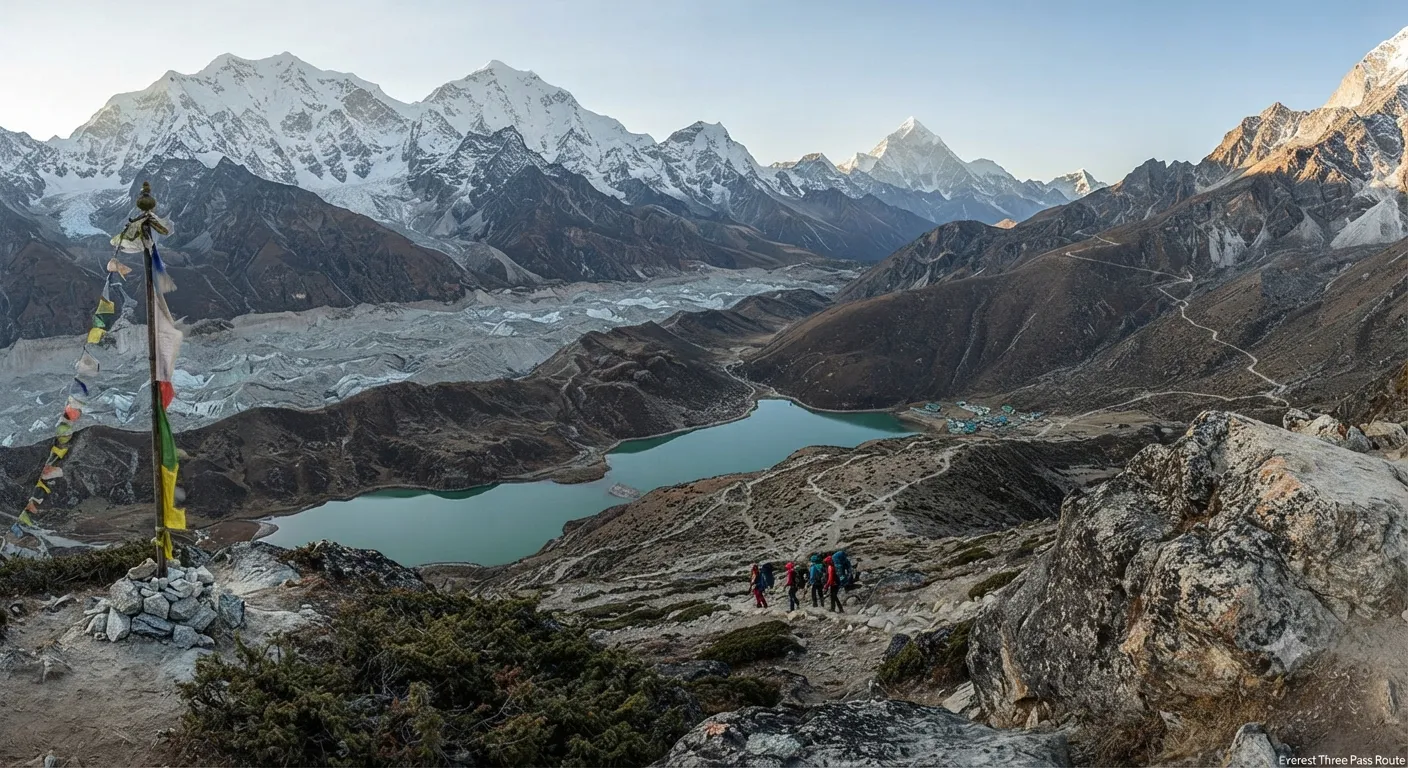
The valley is famous for its chain of emerald-blue glacial lakes, known collectively as the Gokyo Lakes. These lakes are among the highest freshwater lake systems in the world and are considered sacred by local communities.
Gokyo Lakes
The stunning lakes are fed by glaciers and surrounded by snow-covered peaks. Their vibrant blue and turquoise colors create a dramatic contrast against the rugged mountain environment.
Many trekkers spend an extra day in Gokyo to fully appreciate the natural beauty of the area.
Gokyo Ri Viewpoint
The highlight of the scenic Gokyo Valley trekking trail is the climb to Gokyo Ri (5,357m). This viewpoint provides one of the finest panoramic views in the entire Everest region.
From the summit, trekkers can see:
- Everest
- Lhotse
- Makalu
- Cho Oyu
- Ngozumpa Glacier
The sunrise view from Gokyo Ri is often regarded as one of Nepal’s most spectacular mountain experiences.
Ngozumpa Glacier
The trail also passes alongside the Ngozumpa Glacier, the longest glacier in Nepal. Walking near this massive river of ice adds another unique dimension to the trekking experience.
Route Overview
The complete Everest Three Pass route generally begins with a flight to Lukla, followed by a trek through the Khumbu region.
Lukla to Namche Bazaar
The journey starts with a scenic flight into Lukla before trekking through villages such as Phakding and Monjo. The trail eventually reaches Namche Bazaar, the vibrant commercial center of the Everest region.
Namche serves as an important acclimatization stop and offers excellent views of Everest and surrounding peaks.
Crossing Kongma La Pass
The first major challenge is Kongma La Pass. This high-altitude crossing requires good fitness and proper acclimatization.
The route offers magnificent views of glaciers and surrounding mountains while leading trekkers toward Chhukung and Lobuche.
Everest Base Camp and Kala Patthar
Before crossing the second pass, trekkers typically visit Everest Base Camp and Kala Patthar.
Kala Patthar is widely recognized as the best viewpoint for close-up views of Mount Everest. The sunrise and sunset panoramas from here are unforgettable.
Cho La Pass to Gokyo Valley
After visiting Everest Base Camp, trekkers cross Cho La Pass, one of the most exciting sections of the trek.
The pass features rocky terrain, glacier crossings, and dramatic mountain scenery before descending into the beautiful Gokyo Valley.
This transition introduces trekkers to the scenic Gokyo Valley trekking trail and its remarkable lake system.
Renjo La Pass
The final challenge is Renjo La Pass. Many trekkers consider this pass the most scenic of the three.
The views overlooking Gokyo Lakes, Everest, and neighboring peaks create one of the most memorable moments of the entire expedition.
After crossing Renjo La, the trail descends through the peaceful Bhote Koshi Valley before returning to Namche Bazaar and Lukla.
Best Time to Trek
Choosing the right season is essential for successfully completing the complete Everest Three Pass route.
Spring (March to May)
Spring offers:
- Stable weather
- Moderate temperatures
- Blooming rhododendron forests
- Excellent visibility
This is one of the most popular seasons for trekking in the Everest region.
Autumn (September to November)
Autumn is considered the best trekking season due to:
- Clear skies
- Dry conditions
- Comfortable temperatures
- Outstanding mountain views
Many experienced trekkers prefer autumn for the Three Passes Trek.
Winter and Monsoon
Winter can bring heavy snowfall at high passes, while monsoon season often produces rain, cloud cover, and slippery trails. These seasons require additional preparation and experience.
Physical Fitness Requirements
The complete Everest Three Pass route is significantly more demanding than the standard Everest Base Camp Trek.
Trekkers should prepare through:
- Cardiovascular training
- Hiking practice
- Strength exercises
- Endurance workouts
The trek involves multiple days above 5,000 meters, making physical conditioning extremely important.
Acclimatization and Altitude Safety
Altitude sickness is a serious concern throughout the Everest region.
Successful acclimatization strategies include:
- Gradual ascent
- Scheduled rest days
- Proper hydration
- Avoiding alcohol
- Monitoring symptoms carefully
Most itineraries include acclimatization stops in Namche Bazaar and other high-altitude locations to reduce risks.
Cultural Experiences Along the Route
Beyond its natural beauty, the Everest region offers rich cultural experiences.
Trekkers encounter traditional Sherpa communities, ancient monasteries, prayer flags, mani walls, and Buddhist chortens throughout the journey.
Villages such as Namche Bazaar, Dingboche, Thame, and Gokyo provide opportunities to learn about local traditions and mountain lifestyles that have existed for generations.
Essential Packing List
For the complete Everest Three Pass route, trekkers should carry:
- Insulated jacket
- Waterproof shell
- Thermal base layers
- Trekking boots
- Gloves and hat
- Sleeping bag
- Sunglasses
- Trekking poles
- Water purification system
- First-aid supplies
Proper equipment plays a major role in ensuring comfort and safety during high-altitude trekking.
Conclusion
The complete Everest Three Pass route is one of the most rewarding trekking adventures in the Himalayas. Combining Everest Base Camp, three spectacular mountain passes, and the unforgettable scenic Gokyo Valley trekking trail, this journey delivers an unmatched blend of challenge, beauty, and cultural discovery.
For trekkers seeking more than the traditional Everest experience, the Three Passes Trek provides a comprehensive exploration of the Khumbu region. From crossing rugged alpine passes to witnessing the turquoise waters of Gokyo Lakes and standing beneath the world’s highest peaks, every day offers extraordinary memories.